
 English
 Español
 Tiếng Việt

Truck Dock Leveler: A Complete Buying Guide with Load Ratings and Safety Tips A practical field gu...
Dock Equipment Field Guide
The Lip Decides Everything: Hydraulic Dock Leveler Lip Troubleshooting
Lip failures rarely arrive without warning. Slower cycles, a soft bounce under the first wheel, a lip that hesitates at the pit edge — reading these signals early is what separates a ten-minute fix from a three-day dock shutdown.
A forklift idles at the pit. The trailer is sealed and the paperwork is signed, but the operator is pressing the button a fourth time. The platform rises exactly as it should — the lip stays folded in the pit. Nothing looks broken, and nothing is moving either.
The conclusion comes first: a hydraulic dock leveler lip that will not extend, retract, or hold position almost always traces back to four root causes — a stretched or broken lip assist spring, debris packed into the pit or hinge line, a hydraulic fault such as low fluid or internal cylinder leakage, and a control-side problem in the wiring or push-button station. Bent plates, cracked welds, and seized pins are usually consequences of one of those four being left alone, not separate mysteries.
The sections below work through each failure mode in the order an experienced technician checks them, then set out the maintenance cadence that keeps the problem from returning.
Start With the Mechanism, Not the Guesswork
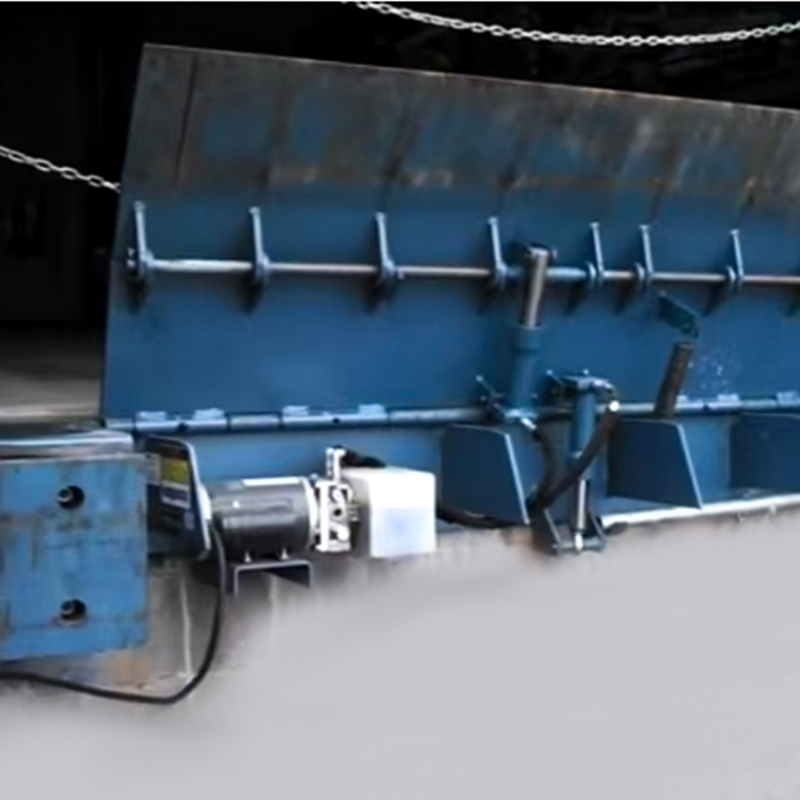
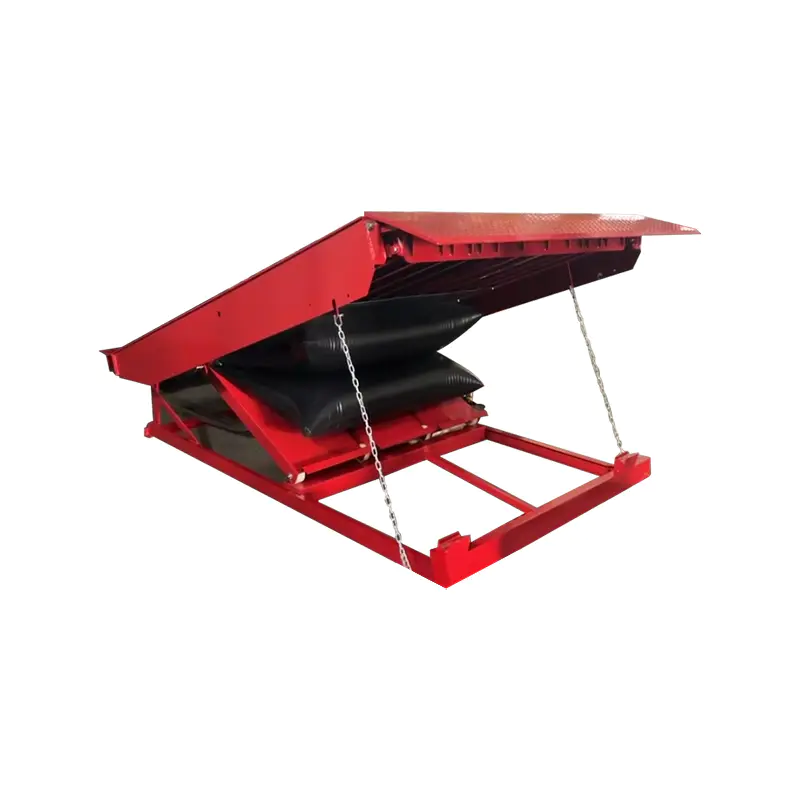
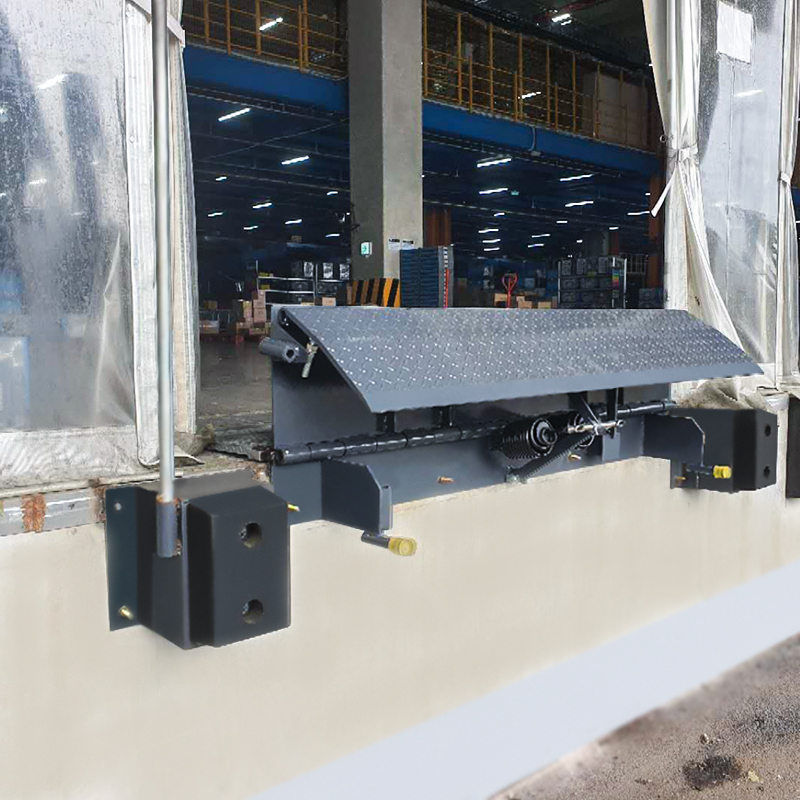
On a hydraulic leveler, the main power unit lifts the platform, while the lip travels its own path — spring-assisted by gravity on most designs, or driven by a dedicated hydraulic circuit on telescopic models. That division of labor is the most useful fact in lip troubleshooting: when the platform rises normally but the lip does not, the fault lives in the lip circuit or its hardware, not in the pump. If you want the full sequence, it helps to first understand the specific working principle of hydraulic dock levelers, because the platform and the lip fail in different places for different reasons.
Good to know: On lip-assisted designs, a tension spring stores energy as the platform rises and releases it to kick the lip out onto the trailer bed. When a technician says the lip assist is weak, they usually mean this spring has stretched past its working length — an inexpensive part behind a disproportionate share of service callouts.
Machine layout matters here too: when platform and lip functions are cleanly separated, a no-extend symptom points to a short, known list of parts rather than a full-system teardown.
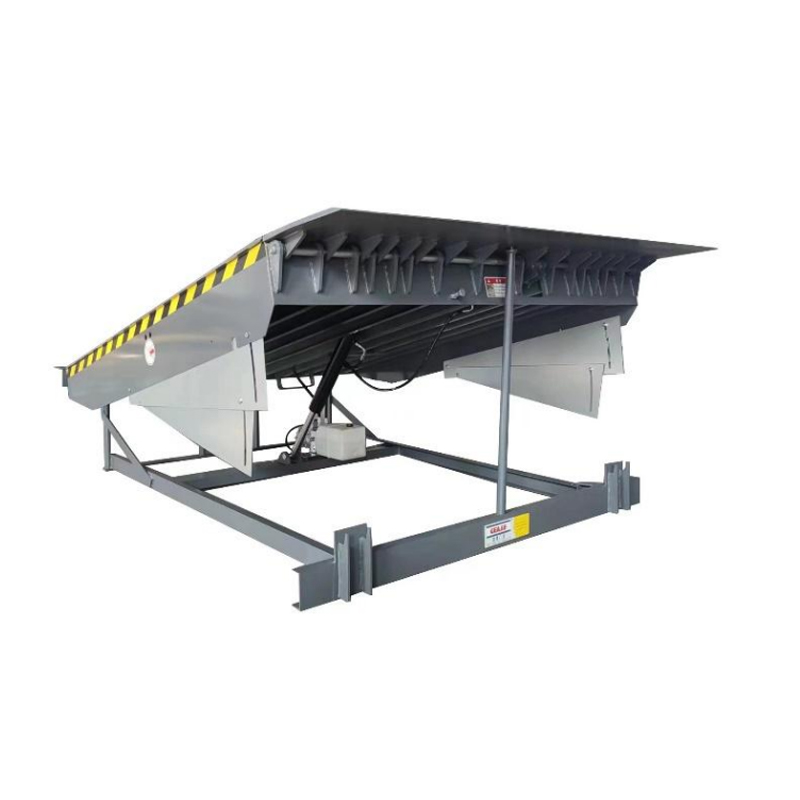
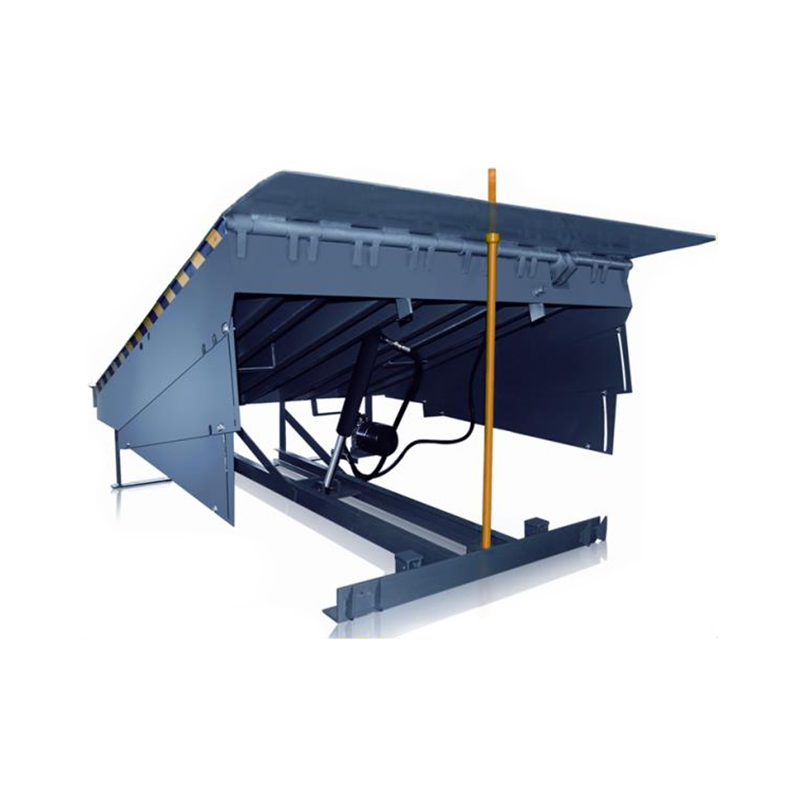 DL-1000 Hydraulic Dock Leveler for Loading PlatformsA swing-lip hydraulic dock leveler with 16mm lip plate, maintenance strut, and safety valve, suited to room-temperature logistics with 6-25 ton dynamic loads. Useful here because cleanly separated platform and lip functions narrow no-extend faults to a short parts list.View Product →
The Symptom Map: What Each Lip Behavior Is Telling You
Troubleshooting moves fastest when the symptom is matched to the part most likely to cause it. The matrix below covers the lip behaviors service teams see most often.
| Symptom | Most likely cause | First check |
|---|---|---|
| Lip will not extend | Weak or broken lip assist spring, low fluid, or a failed solenoid valve | Watch whether the platform rises at full speed; if it does, suspect the lip spring or lip circuit rather than the pump |
| Lip extends but will not hold under load | Internal leakage — worn cylinder seals or a check valve letting fluid bypass | Raise the platform, stop, and measure vertical drift over ten minutes |
| Lip will not retract, or sticks mid-travel | Rusted or bent hinge pins, or debris packed into the hinge line | Clean and grease the pins, then cycle the lip by hand before blaming the hydraulics |
| Slow or jerky movement | Low oil level, a clogged filter, cold-thickened oil, or air in the lines | Check the reservoir sight glass and confirm the oil grade suits the season |
| Bent or cracked lip | Forklift impact at the gap, a trailer floor well below dock level, or chronic overload | Check lip flatness against a straightedge and inspect the hinge welds |
Lip extends slowly, unevenly, or not at all
Work through the checks in order — each one either finds the fault or eliminates it:
- Confirm the platform reaches full height at normal speed, which clears the pump and main circuit.
- Listen for the click of the lip solenoid valve when the lip control is pressed.
- Inspect the lip assist spring for stretched coils, corrosion, or breaks.
- Open the pit and clear debris from the lip hinge and the area under the plate.
- Top up hydraulic fluid to the sight-glass line, using only the grade the manufacturer specifies.
Lip drifts down or will not hold under load
A lip that sinks a centimeter or two within the first minute under load is showing hydraulic bypass, and no amount of spring adjustment will fix it. The usual culprits are worn cylinder seals or a check valve that no longer seats. Telescopic lip designs change the equation here, because the lip extends under positive hydraulic control rather than spring power, which makes extension faults easier to isolate.
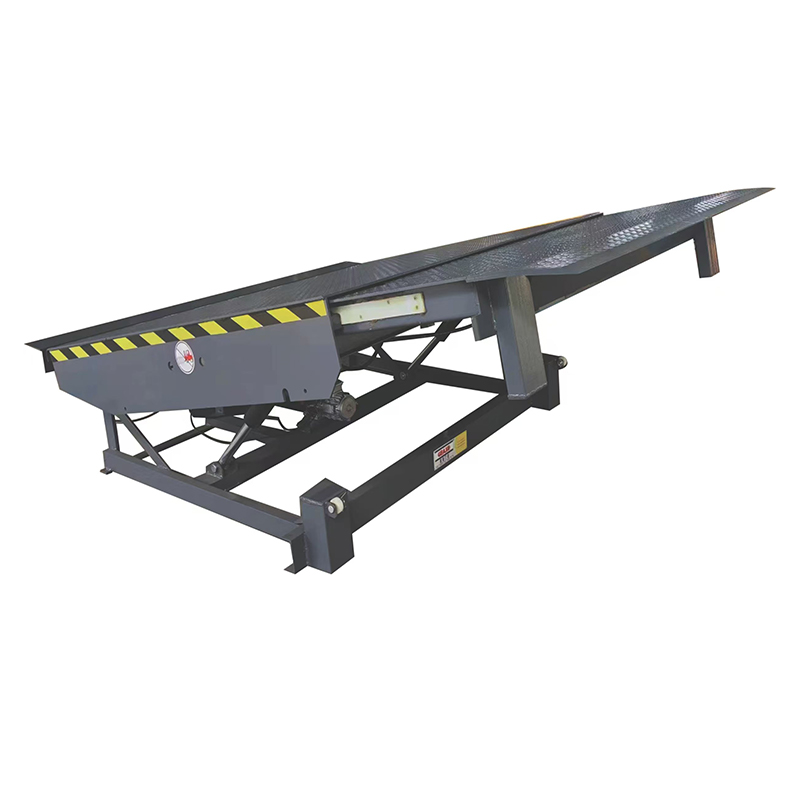
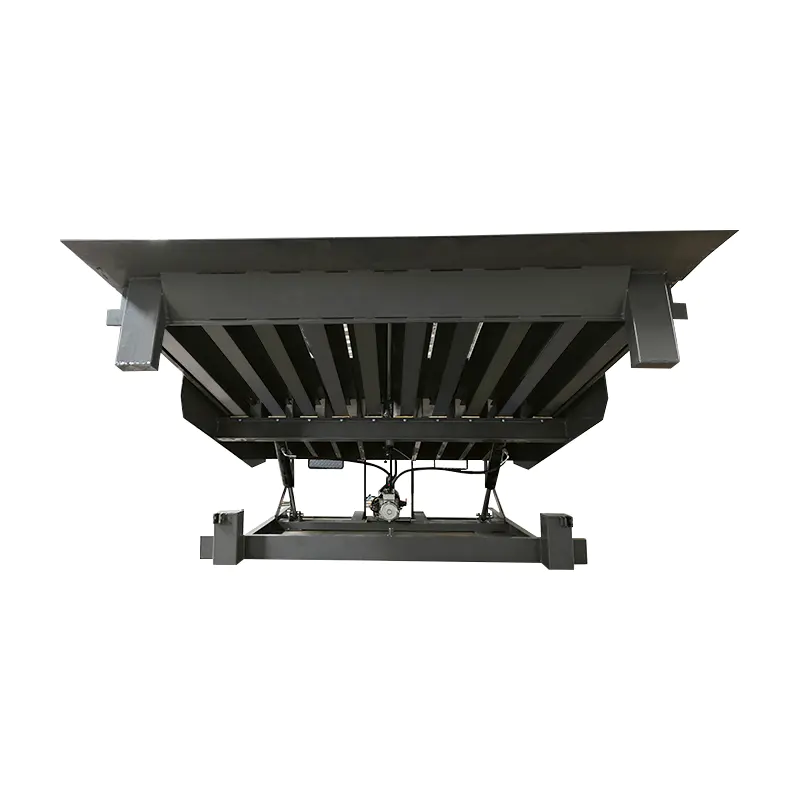 DL-2000 Dock Leveler with Telescopic LipA telescopic-lip dock leveler for low-temperature, high-sealing facilities, extending the lip under positive hydraulic control. Its hydraulic extension makes lip-extension and sink-under-load faults easier to isolate than spring-powered designs.View Product →
Bent, cracked, or dropped lips
Stop work: A cracked lip can fail without warning under a forklift. If you can see a bend, a crack, or exposed weld seams, keep cross-traffic off the plate until it has been inspected.
Impact is almost always the cause. A trailer floor that sits well below dock level turns the lip into a ramp with a hard edge, and wheels hammer that edge thousands of times. Equally common is the lip that was never fully seated before the first crossing. The fix is procedural as much as mechanical: spot trailers accurately, confirm full lip contact, and treat a recurring height mismatch as an engineering problem to solve rather than a bump to drive over.
Bent lips are rarely metal fatigue. They are alignment problems that were driven over instead of corrected.
Debris: The Fault That Disguises Itself as a Hydraulic Problem
Pits are the lowest point of the warehouse, which makes them a magnet for broken pallet boards, shrink wrap, banding clips, and dust. In cold-chain docks, condensation adds a second problem: ice forming around the lip hinge overnight. All of it produces the same symptoms as a hydraulic fault — a lip that moves slowly, stops partway, or grinds — which is why housekeeping belongs near the top of any troubleshooting sequence, right after the basic electrical checks.
What works: One distribution center cut lip-related service calls by more than half with a single change — a five-minute pit sweep and hinge-line grease added to the weekly cleaning round, plus a daily visual check that the lip completes its full cycle.
Two habits do most of the work. First, never let the pit become storage, because a single banding clip under the lip hinge can mimic a failed valve. Second, grease the hinge pins on schedule: a dry pin corrodes, binds, and eventually bends, at which point a maintenance item has become a structural repair.
A Maintenance Cadence That Prevents Most Lip Failures
The lip moves, lands, and takes the first wheel of every load, so it deserves its own schedule rather than a line item on a general checklist. The intervals below suit a typical multi-shift dock; a high-frequency cross-dock should tighten them.
| Interval | Task |
|---|---|
| Daily | Visual check: the lip completes its full cycle, no visible leaks, pit clear of debris |
| Weekly | Grease hinge pins and lip linkage; check lip assist spring tension and condition |
| Monthly | Verify hydraulic fluid level; inspect fittings for weeping; test for drift under load |
| Annually | Full service: cylinder seal inspection, valve calibration, structural weld inspection, oil replacement |
Safety first: Before any hands-on inspection, engage the maintenance strut or safety leg and follow lockout/tagout procedure. A platform with a drifting cylinder is stored energy — never rely on the hydraulics alone to hold the deck up while someone works beneath it.
When Troubleshooting Turns Into a Replacement Decision
Repairs make sense while failures stay isolated. The math changes when they cluster, and three signals usually end the repair argument:
- Cracks appearing at the main hinge welds or around the lip hinge
- Hydraulic drift that returns soon after cylinder or valve service
- Frame corrosion that has reached the pit angle or the support steel
As a working rule, when annual repair spend approaches a meaningful share of replacement cost, or unplanned stoppages keep interrupting schedules, replacement becomes the cheaper option. If you reach that point, it pays to review how to choose the right hydraulic dock leveler for your actual duty cycle — trailer mix, axle weights, and daily cycle counts — before committing to a model.
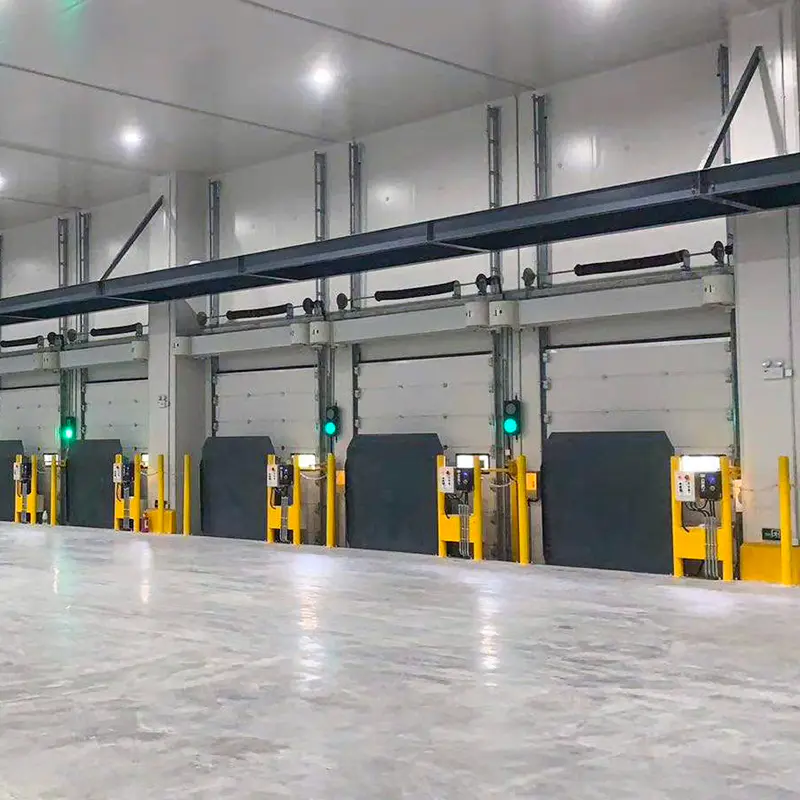
For cold-chain and food-grade facilities, it is also worth considering how the lip is stored when idle. A vertical-storing design keeps the plate and lip off the pit floor entirely, cutting debris exposure while preserving the door seal at the same time.
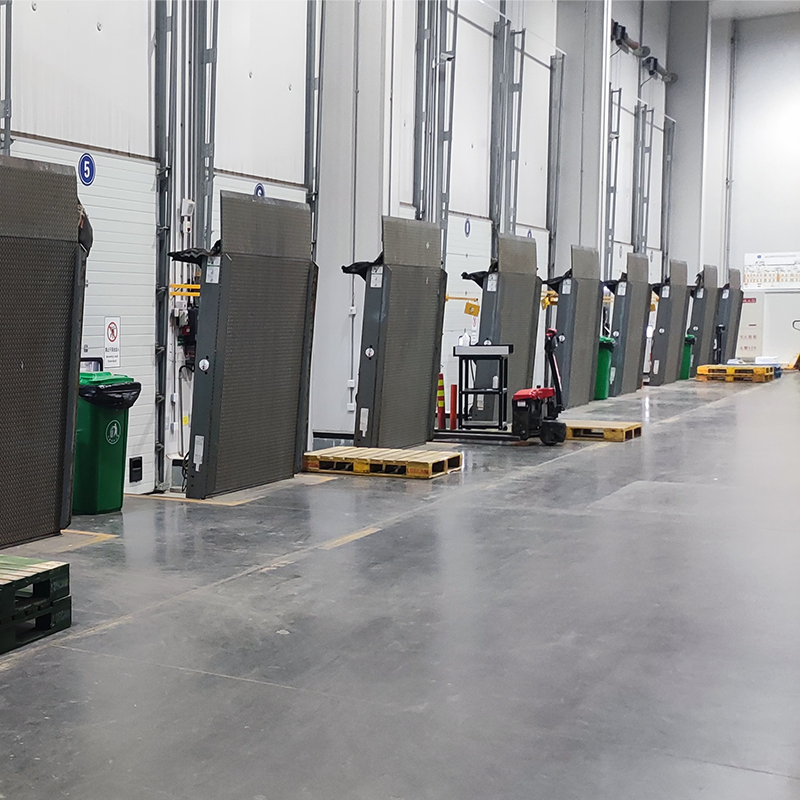 DL-2000 Vertical-Storing Industrial Dock LevelerA vertically storing dock leveler for food, pharmaceutical, and cold storage environments, keeping plate and lip off the pit floor when idle. This reduces debris exposure and preserves door seals, supporting dependable long-term lip performance.View Product →
A hydraulic dock leveler lip is a few hundred kilograms of steel that swings, lands, and takes the first wheel of every load, several times an hour. When it misbehaves, resist the urge to blame the pump first: check the spring, then the pit, then the hydraulics, then the controls, in that order. Measure drift instead of guessing at it, keep the hinge line clean and greased, and write down what you find so the pattern stays visible across seasons. Treated as the short list of moving parts it really is, the lip stays dependable — and dependable is exactly what a dock edge should be.
