
 English
 Español
 Tiếng Việt

Truck Dock Leveler: A Complete Buying Guide with Load Ratings and Safety Tips A practical field gu...
Loading Dock Reliability — Field Guide
Hydraulic Dock Leveler Maintenance: Keep the Dock Working, Not Just Running
Slow lifts, weeping seals, and dirty pits cause most unplanned dock downtime. This guide shows what to inspect, when to lubricate, and how to protect the hydraulic leveler your whole loading operation depends on.
It starts quietly. On a cold Monday, the leveler at Bay 3 takes a few extra seconds to rise. By Thursday it needs two attempts. Nobody stops the shift over it; the forklift operator simply waits. A month later, the lip hinge binds during a busy unload, the trailer shifts, and a pallet of finished goods hits the concrete. This is how hydraulic dock leveler maintenance gets neglected — not through dramatic breakdowns, but through gradual degradation that no one writes down.
The pages that follow cover the checks that matter, the failure modes that cost real money, and the routine habits that keep a hydraulic dock leveler dependable for thousands of cycles.
Why Maintenance Is a Cost Driver, Not Paperwork
A hydraulic dock leveler carries forklift traffic that can exceed five tons, cycles hundreds of times a day, and lives in a pit that collects dust, shrink wrap, rain, road salt, and whatever a trailer drags in. The machine is robust — most well-built platforms last fifteen years or more. But robustness is not immunity.
The real cost of a neglected leveler appears in three places:
- Unscheduled downtime. When a platform fails mid-shift, that bay is effectively dead. The trailer has to be resealed, the load re-staged, and other bays absorb the pressure.
- Safety exposure. Unexpected hydraulic drops, lip collapses, and intermittent noises that disappeared yesterday all carry injury risk for forklift operators and dock staff.
- Premature replacement. Small leaks introduce air into the hydraulic system and accelerate pump wear; a clogged filter forces the pump to work harder; a corroded pit shortens the whole structure's life.
The least expensive intervention in industrial maintenance is the one performed early. A ten-minute weekly visual check removes most of the surprises that end up as emergency service calls.
For most distribution centers, the standard workhorse is a formed-steel hydraulic platform with a proven service record. It takes the punishment — and it rewards a consistent maintenance habit.
A leveler is not maintained because someone wrote a checklist. It is maintained because someone looked at it, listened to it, and acted before it failed.
There is also a selection argument. If the platform has been underspecified for the traffic it now faces, no maintenance ritual can fully compensate. Maintenance keeps a well-matched leveler alive; it cannot rescue an under-engineered one. That is why choosing the right hydraulic dock levelers for the duty cycle matters from day one.
What Actually Wears Out on a Hydraulic Dock Leveler
A hydraulic dock leveler is really three systems stacked together. Maintenance becomes easier when you separate them.
The Hydraulic Circuit
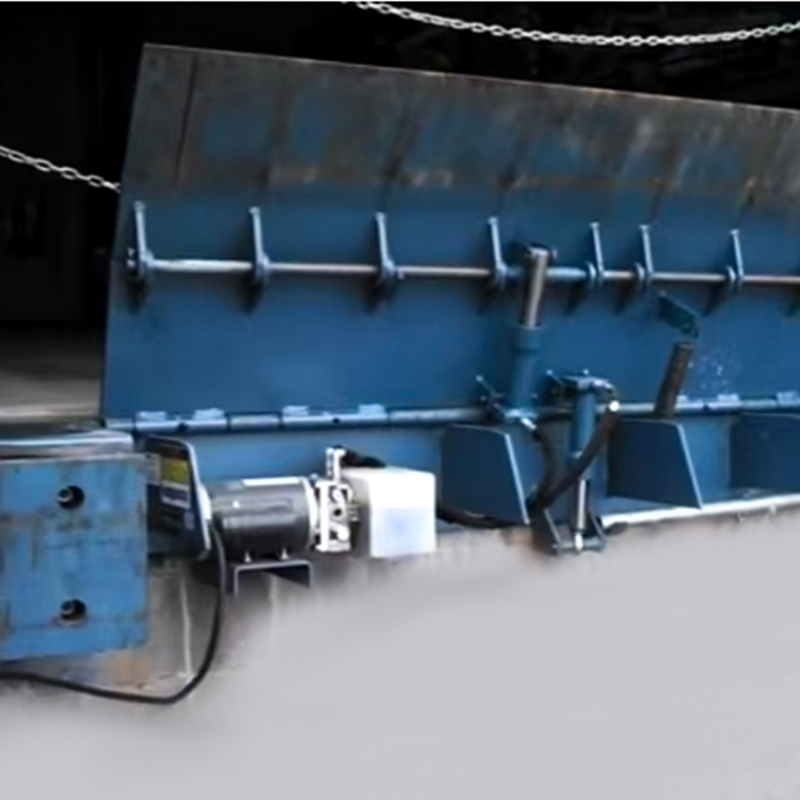
The pump, motor, cylinder, hoses, fittings, reservoir, and valves produce the lifting force. The most common wear points are the cylinder seals, which degrade with every stroke; the hoses, which develop micro-cracks from flexing and vibration; and the fluid itself, which slowly accumulates water and sludge.
The Mechanical Structure
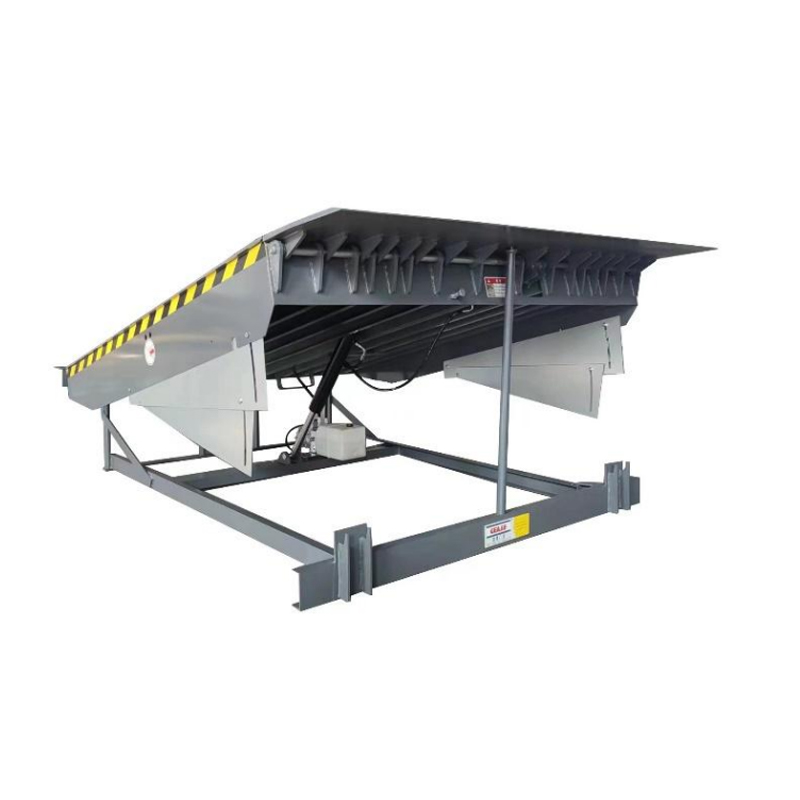
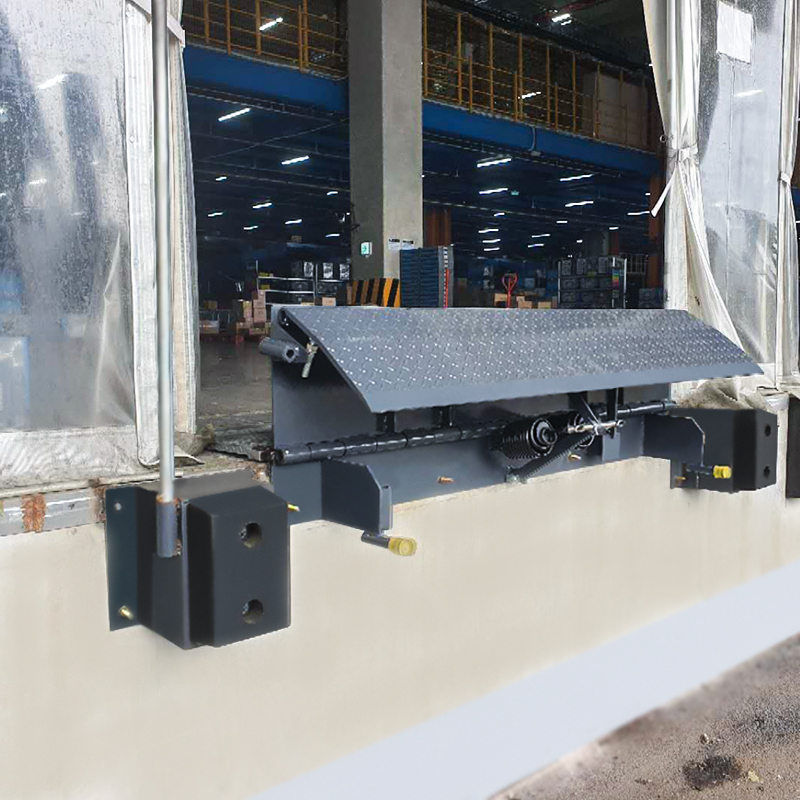
The deck plate, lip and its hinge assembly, side plates, toe guards, and safety strut take physical abuse from truck beds and forklift wheels. Hinge pins and bushings wear; wear pads flatten; paint chips expose steel to corrosion. The lip mechanism receives the hardest treatment, because it meets a trailer bed at a slightly different height every time.
The Control System
Limit switches, push buttons, relays, and the power unit's contactor decide when the deck should move. These fail differently from mechanical parts — not gradually, but suddenly, from a seized switch or a broken wire. Moisture ingress is the leading cause.
| Subsystem | Component | Most Common Failure | Practical Check |
|---|---|---|---|
| Hydraulic | Cylinder seals | Weeping oil, slower movement | Monthly visual |
| Hydraulic | Hoses and fittings | Micro-cracks, loose fittings | Monthly visual |
| Hydraulic | Fluid | Contamination, low level | Weekly level check |
| Mechanical | Lip hinge and pivot pins | Binding, sideways play | Monthly, with lip cycle |
| Mechanical | Safety strut | Stuck pivot, lost pin | Quarterly, before service |
| Mechanical | Wear pads and rollers | Flat spots, noisy travel | Quarterly |
| Controls | Limit switches | Misalignment, corrosion | Quarterly functional test |
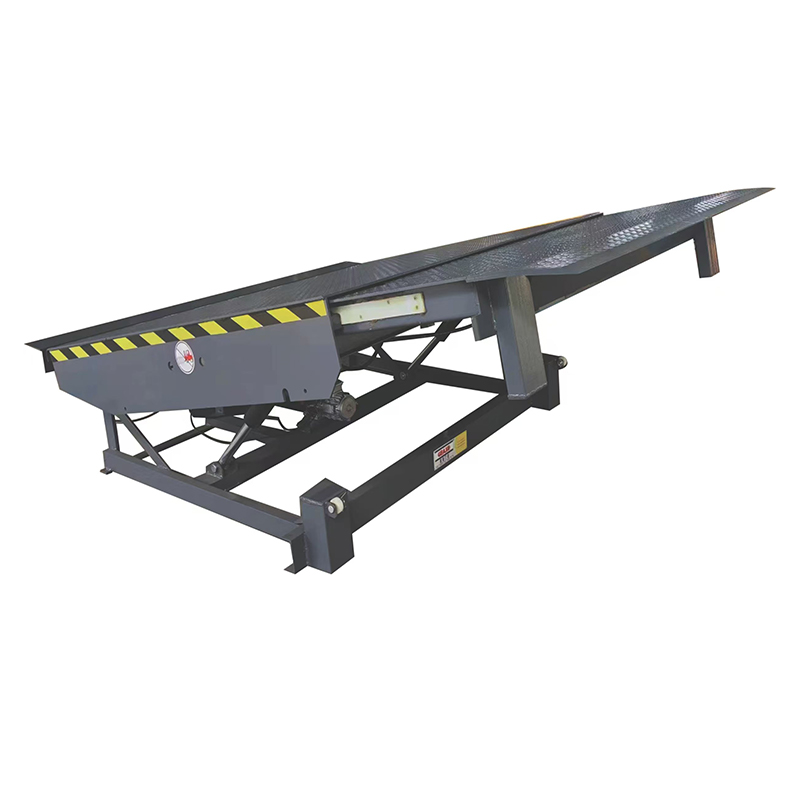
For bays where trailer bed heights vary widely, the lip assembly deserves more attention than anything else. The guides and bearings of a telescopic-lip platform are built for that condition, and they belong on the maintenance schedule in writing.
In a cold store, the same checks apply, but the schedule should be tighter; low temperatures harden seals and make hinge grease stiff.
Hydraulic System Checks: Fluid, Leaks, and Cold Weather
The hydraulic circuit is the one place where a small failure becomes a complete failure quickly. Three checks deserve priority.
Fluid Level and Condition
Check the reservoir level with the deck in the position the manufacturer specifies. A low reading on a leveler that has not been touched usually means a leak, or a seal passing oil internally. Topping up without finding the cause simply hides the signal. Fluid that looks milky has absorbed water; fluid that smells burnt has been overheated. Both require a change, not a top-up.
Info. In cold stores or unheated docks, ask the leveler supplier for the approved cold-weather hydraulic fluid. Standard-grade oil protects the pump in summer, but winter viscosity can cause slow cycles and cavitation noise.
Leaks, Drips, and the Ones That Stay Wet
A thin film of oil on a cylinder rod is common and not necessarily a problem. A forming drop is different. Check accessible fitting torque, inspect hose covers for abrasion, and distinguish between seepage and a leak that is now on this week's repair list. A useful field rule: wipe the area, run ten cycles, and look again. If it is wet after ten cycles, schedule the repair.
Cold-Weather Behavior
Hydraulic oil thickens as temperatures drop. A leveler that lifts briskly in July can take four or five extra seconds in January, and that is not an electrical fault. Facilities in freezing climates should use the viscosity grade recommended for local conditions, allow a few slow cycles at the start of a shift, and treat a winter slow-lift as a physics issue, not a failure. If you want to reason about these symptoms properly, it helps to understand the operating sequence. The working principle of hydraulic dock levelers explains which valve, cylinder, and switch govern each phase of the cycle.
Cleaning, Lubrication, and Corrosion Control
Mechanical care can be compressed into three words: keep it clean, keep it moving, keep the rust away.
The pit is the first place to look. Debris falls through the gaps around the deck every day — shrink wrap, cardboard, dust, even freight strapping. That material works its way into hinges and hydraulic parts, holds moisture against the structure, and in hygiene-sensitive facilities becomes an entry point for pests. Clean the pit on a fixed schedule, weekly where volume is high, and never store anything inside it. The pit belongs to the leveler.
Lubrication is next. Grease fittings on the main pivot, lip hinge, and any roller or slide surface should receive a small amount of approved grease at the recommended interval. Over-greasing is nearly as bad as under-greasing: excess grease attracts the same dust and debris that accelerate wear. After greasing, run the leveler through two or three full cycles and wipe off whatever squeezes out.
Corrosion is the slow killer. Coastal air, de-icing chemicals carried in by truck tires, and condensation dripping from cold-store evaporators all attack deck edges, side plates, and hinge assemblies. Touch up chipped paint before rust takes hold, keep deck surface drainage clear, and pay attention to the corners that trap moisture.
Weather plays into this more than most teams realize. Rain washes dirt into hinge gaps, snow-melt chemicals sit on the deck for hours, and summer sun dries and cracks rubber seals and bumpers. The seasonal part of maintenance is not a myth — it is simply a matter of looking at the areas where weather physically reaches the mechanism.
Warning. Before any cleaning or lubrication under a raised deck, engage the safety strut and apply lockout/tagout to the power unit. The deck can weigh from one to three tons, and hydraulic pressure is not a safety device.
Common Failure Modes and How to Read Them
Most leveler problems announce themselves in one of four ways. Learn to read the symptom before ordering parts.
- The deck rises slowly or not at all. Causes include low fluid, thickened oil in cold weather, a clogged suction filter, or a worn pump. If a leveler has performed well for years and weakens suddenly, suspect the pump before anything else.
- The lip will not extend, or extends with a jerky motion. Likely causes are debris around the lip hinge, damaged seals in the lip cylinder, or a misadjusted limit switch.
- The deck drifts down while a forklift is on it. This is the most serious symptom. It indicates internal bypass past the cylinder seals, or a valve that is not seating. Do not schedule this one for later.
- The leveler is noisy — groaning, chatter, or a bang at the end of travel. Usual causes are air in the fluid, dry bearings and hinges, loose mounting bolts, or a flow-control valve that needs adjustment.
A leveler that drifts under load is not a maintenance nuisance; it is a safety problem with a repair cost attached. If the same failure returns after seals have been replaced, the root cause is usually contamination in the fluid or a scored cylinder rod.
There is also a selection side to this. When a dock runs two or three shifts and the maintenance record shows repeated failures despite good care, the platform may be at the edge of its duty cycle. A heavier frame is the legitimate answer, and that is where purpose-built heavy-duty platforms come into the discussion.
Danger. Never support a raised dock leveler with a block, a pallet, or a forklift. Use the manufacturer's safety strut in its designed position. A hydraulic cylinder can lose pressure at any moment, and there is no second chance under a falling deck.
When to Escalate to Professional Service
A good self-maintenance program reduces the need for outside technicians, but it does not eliminate it. Plan for a professional inspection at least once a year — quarterly on high-velocity docks — to check what a visual walk-around cannot: internal seal condition, pump flow, valve adjustment, electrical insulation, and weld integrity.
Escalate immediately when you see any of the following:
- Oil dripping steadily from a cylinder or hose while the deck is at rest.
- A metallic noise from the hinge area — usually a bushing or bearing that has exhausted its life.
- Downward drift under load, even a few millimeters.
- A limit switch that has stopped functioning consistently.
Keep a simple service log: dates, fluid changes, lubrication performed, parts replaced, and technician visits. The record turns vague observation into a pattern, and patterns tell you when the leveler is approaching the end of its economic life.
Success. A dock that passes a simple weekly check — stable fluid level, no new drips, clean pit, smooth lip travel, safety strut present and functional, deck holding position — has eliminated most of the failures that the industry blames on unexpected hydraulic trouble.
Hydraulic dock leveler maintenance is not about paperwork, and it is not about waiting for something to break. It is about catching deterioration while it is still cheap: a drop of oil noticed today, a hinge cleaned this week, a switch tested this quarter. Set the routine, make every check quick and visual, and the dock will do what it is supposed to do — open, load, close, and repeat — without ever becoming the reason a shipment is late.
The bays you never think about are the ones being maintained properly.
