
 English
 Español
 Tiếng Việt

Facility Safety · Loading Dock Risk What Types of Injuries or Accidents Do Dock Levelers Help Pre...
When temperatures drop below freezing, air-powered dock levelers consistently outperform hydraulic dock levelers in real-world loading dock environments. The core reason is simple: air-powered systems have no hydraulic fluid that can thicken, gel, or leak in cold conditions. For warehouse operators in cold climates, this difference translates directly into fewer breakdowns, lower maintenance costs, and uninterrupted productivity during winter months. If your facility operates in a region where temperatures regularly fall below 32°F (0°C), understanding this performance gap is critical before choosing between these two types of dock door levelers.
Why Hydraulic Systems Struggle in Cold Weather
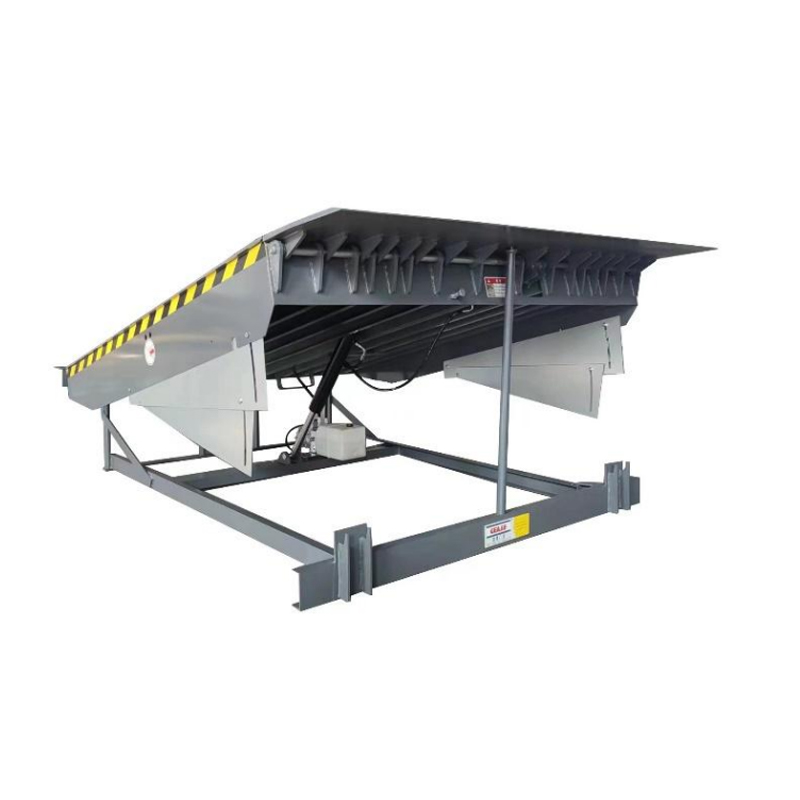
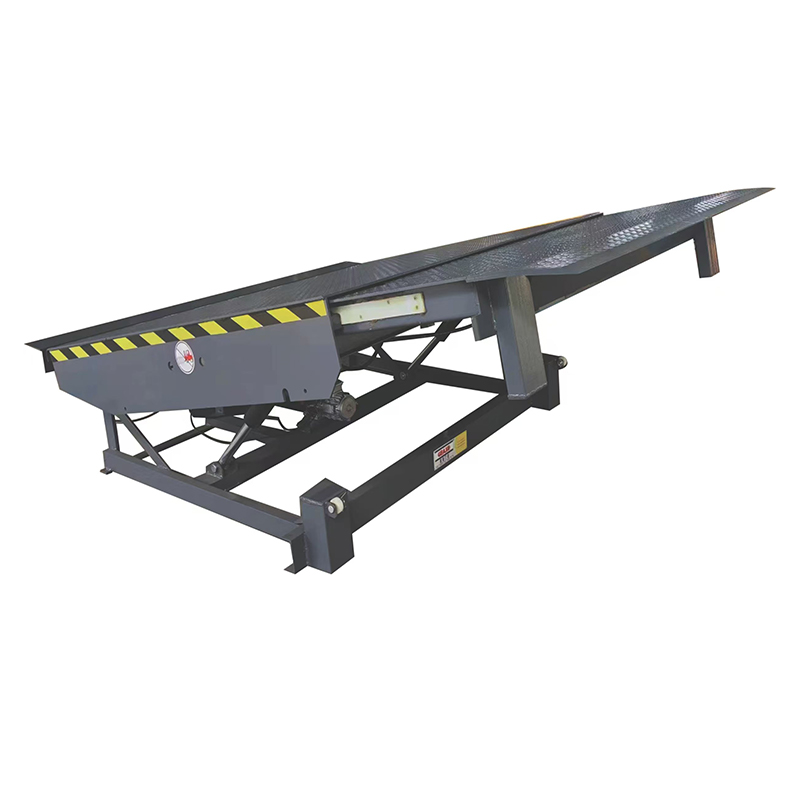
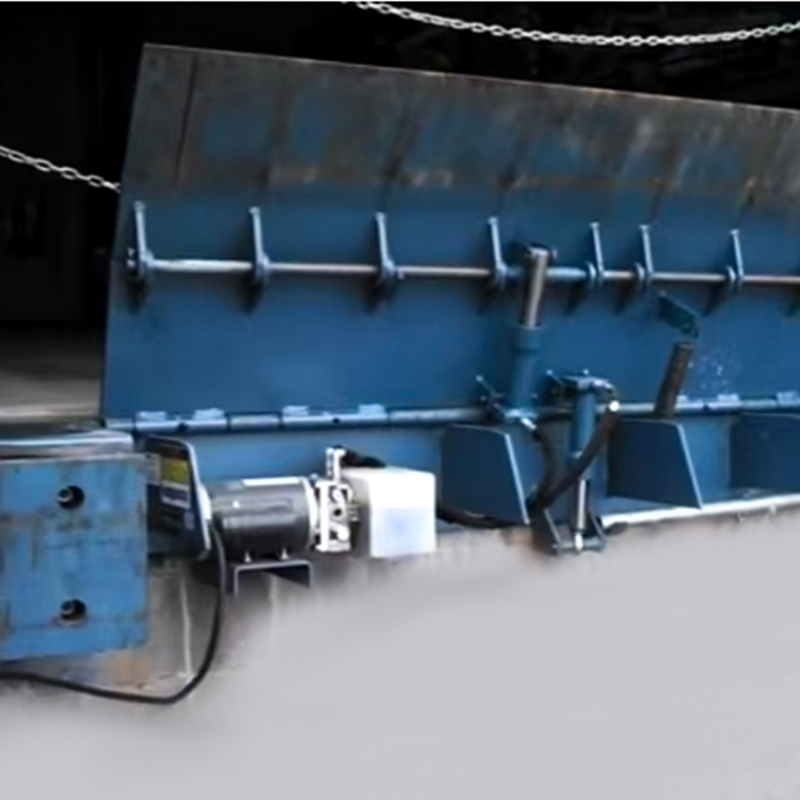
The fundamental vulnerability of a hydraulic loading dock leveler in freezing temperatures lies in its dependence on hydraulic fluid. Standard hydraulic fluid begins to thicken noticeably at temperatures around 20°F (-7°C), and at temperatures approaching -10°F (-23°C), it can become so viscous that the pump struggles to circulate it effectively. This leads to a range of operational problems that directly impact dock throughput.
Common cold-weather failure points in a hydraulic loading dock leveler include:
- Slow or sluggish platform raise and lower cycles due to thickened fluid
- Seal contraction and cracking, leading to hydraulic fluid leaks
- Pump motor overload from forcing cold, thick fluid through narrow lines
- Cylinder rod corrosion accelerated by condensation and freeze-thaw cycles
- Inconsistent lip extension timing, creating safety hazards at the dock face
Facilities that use a hydraulic loading dock leveler in unheated or semi-heated dock areas often spend significantly more on seasonal maintenance. Industry service data suggests that cold-weather hydraulic seal replacements and fluid flushes can add $300–$700 per leveler annually in northern climate facilities, depending on usage intensity.
How Air-Powered Dock Levelers Handle Freezing Conditions
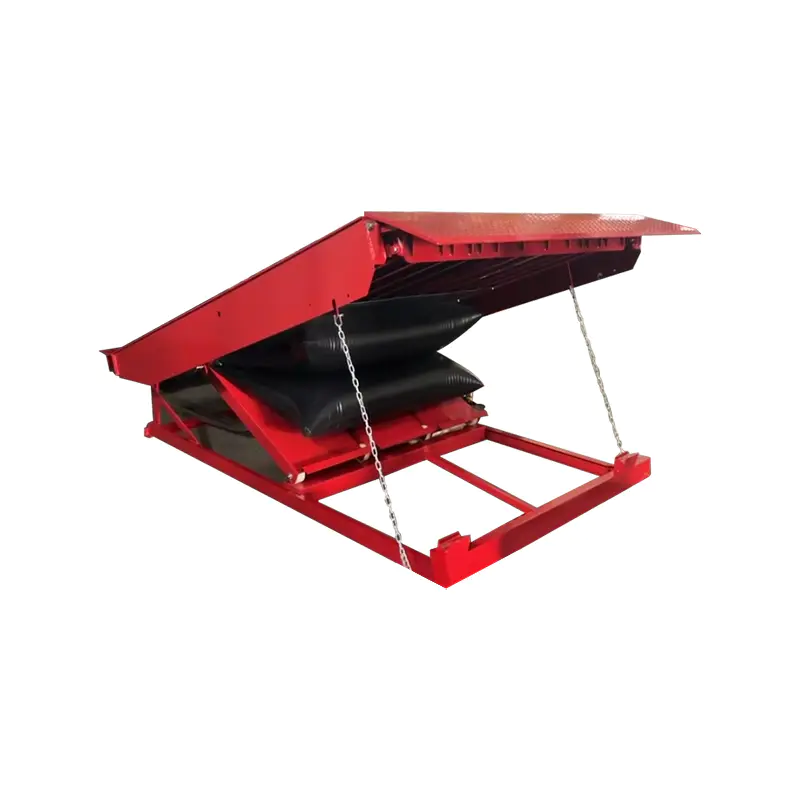
An air-powered dock leveler operates using an inflatable airbag mechanism rather than hydraulic fluid or mechanical springs. When the operator activates the system, compressed air inflates the airbag beneath the deck, raising the platform smoothly and consistently. Because air is the working medium, cold temperatures have virtually no effect on the actuation performance of the leveler.
Air does not gel, thicken, or become viscous in sub-zero temperatures. There are no fluid lines to freeze, no seals to crack from hydraulic pressure, and no pump motor to overload. The airbag material used in modern air-powered dock levelers is engineered from reinforced rubber compounds rated to withstand temperatures as low as -40°F (-40°C) in industrial-grade models — a performance threshold that far exceeds most hydraulic system specifications in the same price range.
Key cold-weather advantages of air-powered dock levelers:
- Consistent raise and lower cycle time regardless of ambient temperature
- No hydraulic fluid to change, flush, or monitor seasonally
- Airbag inflation is unaffected by temperature swings from -40°F to 120°F
- Fewer moving parts mean fewer freeze-related mechanical failures
- No risk of contaminating the dock floor with leaked hydraulic fluid in cold conditions
Direct Performance Comparison: Cold Weather Operation
The table below summarizes the key operational differences between an air-powered dock leveler and a hydraulic loading dock leveler when operating in freezing or sub-freezing environments.
| Performance Factor | Air-Powered Dock Leveler | Hydraulic Loading Dock Leveler |
|---|---|---|
| Operating Temperature Range | -40°F to 120°F (-40°C to 49°C) | Typically 0°F to 100°F (-18°C to 38°C) |
| Cold-Weather Cycle Speed | Unchanged — air is unaffected | Noticeably slower due to fluid viscosity |
| Seal/Fluid Failure Risk | Very low — no hydraulic seals or fluid | High — seals contract and fluid thickens |
| Winter Maintenance Cost | Minimal — no seasonal servicing needed | $300–$700/unit/year in cold climates |
| Risk of Unplanned Downtime | Low | Moderate to high in unheated docks |
| Environmental Contamination Risk | None — no fluid to leak | Possible fluid leaks on dock floor |
Impact on Dock Door Levelers Installed in Unheated Facilities
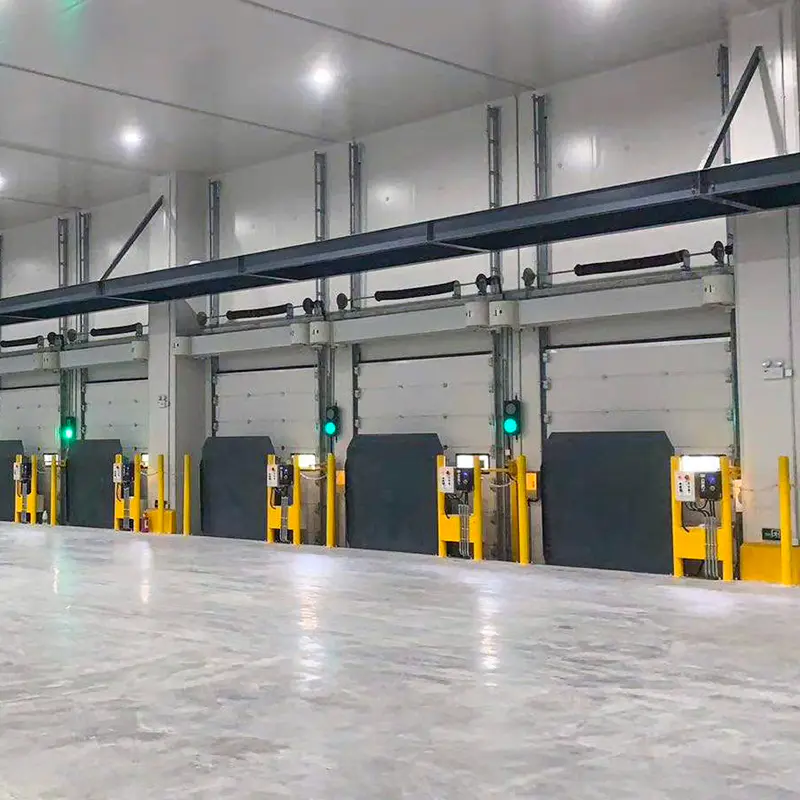
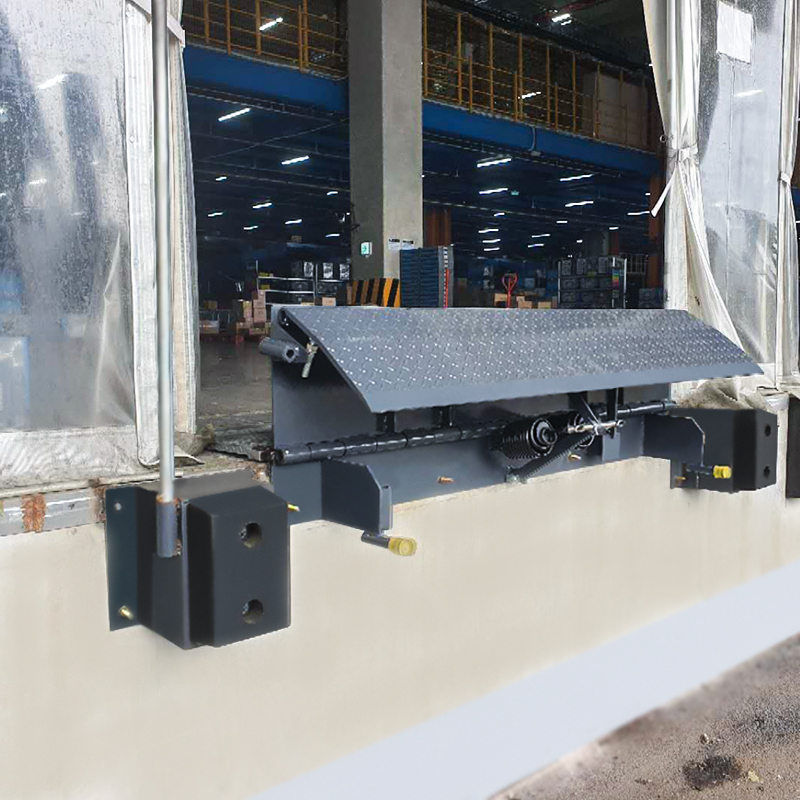
Many distribution centers and cold storage facilities operate dock door levelers in environments where the dock bay itself is not climate-controlled. Refrigerated warehouses, frozen food distribution hubs, and outdoor receiving areas are common examples. In these environments, the performance gap between air-powered and hydraulic systems becomes even more pronounced.
For dock door levelers installed in refrigerated or unheated dock areas, the following real-world scenarios illustrate the practical difference:
Frozen Food Distribution Center
A frozen food facility operating at ambient dock temperatures of 15°F (-9°C) reported that their hydraulic loading dock levelers required pump motor replacements on three of eight units within a single winter season. After switching four of those dock positions to air-powered dock levelers, zero mechanical failures were recorded at those positions over the following two winter seasons.
Outdoor Receiving Dock in Northern Climate
An outdoor receiving dock in Minnesota, where January temperatures average 13°F (-11°C), found that their hydraulic loading dock levelers required 15–20 minutes of warm-up time each morning before reliable operation could begin. Air-powered dock levelers installed at the same facility were fully operational within seconds of activation, regardless of overnight temperatures.
Maintenance Considerations for Cold Climate Dock Operations
Even the best-maintained hydraulic loading dock leveler requires additional attention when operating in freezing conditions. Facilities typically must follow a winter maintenance protocol that includes:
- Switching to low-viscosity cold-weather hydraulic fluid in late fall
- Inspecting and replacing cylinder seals before the first hard freeze
- Installing heat tape or insulation wrap on exposed hydraulic lines
- Checking for fluid leaks weekly during cold months
- Running the leveler through a full cycle each morning to warm the fluid before dock operations begin
By contrast, air-powered dock levelers require none of these cold-weather-specific procedures. Routine maintenance for an air-powered dock leveler focuses on airbag inspection, lip hinge lubrication, and control system checks — tasks that are not temperature-dependent and can be performed on a standard annual or semi-annual schedule regardless of season.
For a facility operating 10 dock positions, the cumulative savings from eliminating cold-weather hydraulic maintenance can reach $3,000–$7,000 per winter season, not including the cost of unplanned downtime when a hydraulic unit fails mid-shift.
Is an Air-Powered Dock Leveler Always the Right Choice for Cold Climates?
For most facilities operating in cold or freezing environments, an air-powered dock leveler is the more reliable and cost-effective choice. However, there are factors worth evaluating before making a final decision:
- Compressed air availability: Air-powered dock levelers require a reliable compressed air supply at the dock. Facilities without an existing air line infrastructure will need to factor in installation costs.
- Load capacity requirements: Both air-powered and hydraulic dock levelers are available in capacities ranging from 25,000 lbs to 80,000 lbs or more. Verify that the air-powered model selected meets your specific forklift and pallet load requirements.
- Existing pit dimensions: Retrofitting dock door levelers in an existing pit requires matching the leveler dimensions to the pit size. Air-powered models generally fit standard pit dimensions used by hydraulic units.
- Climate zone: Facilities in mild climates where temperatures rarely fall below 25°F (-4°C) may find that a properly maintained hydraulic loading dock leveler performs adequately without significant cold-weather issues.
For facilities in USDA Plant Hardiness Zones 3–6, or any operation involving refrigerated or freezer dock environments, the operational and financial case for choosing an air-powered dock leveler over a hydraulic loading dock leveler is compelling and well-supported by real-world performance data.
Air-powered dock levelers are the superior choice for cold-weather dock operations. They eliminate the core vulnerabilities of hydraulic systems — fluid viscosity, seal failure, and pump strain — that are directly triggered by freezing temperatures. They require less seasonal maintenance, deliver consistent cycle performance year-round, and reduce the risk of costly unplanned downtime during peak winter shipping periods.
Whether you are evaluating new dock door levelers for a greenfield facility or considering replacing existing hydraulic loading dock levelers in a cold-climate warehouse, air-powered technology offers a measurable performance and reliability advantage when temperatures fall below freezing. The data, the maintenance records, and the operational experience from cold-climate facilities all point in the same direction.
